Open Source & Lab

We ship open models — and work upstream.

The factory runs on open source. We quantise and repackage open models so they run well on local hardware, publish the builds with measured serving profiles, and work upstream in the open-source projects our factory is built on.

Open models

Hugging Face

Quantised builds of open models for Apple Silicon (MLX and mflux), each with a measured serving profile — for example a 125-billion-parameter mixture-of-experts model that runs on a single Mac with about 40 GB of memory.

Models on Hugging Face

In the lab

Dataset: agent release gate

An open dataset of synthetic agent change requests, labelled with risk class and release gates.

Fine-tuned model

A small LoRA adapter on Qwen3-4B that rates the risk of an agent change and the release gates it needs.

Datasets & evaluation

Datasets & evaluation

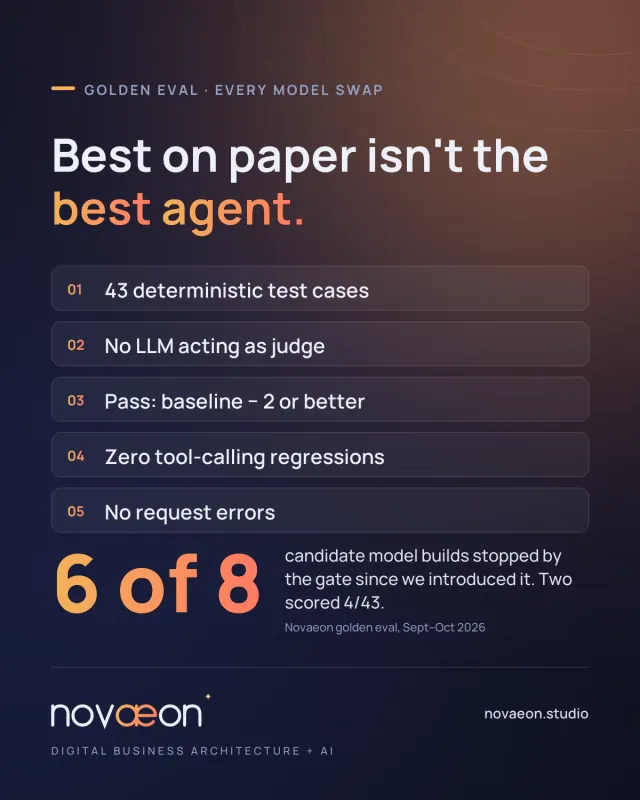
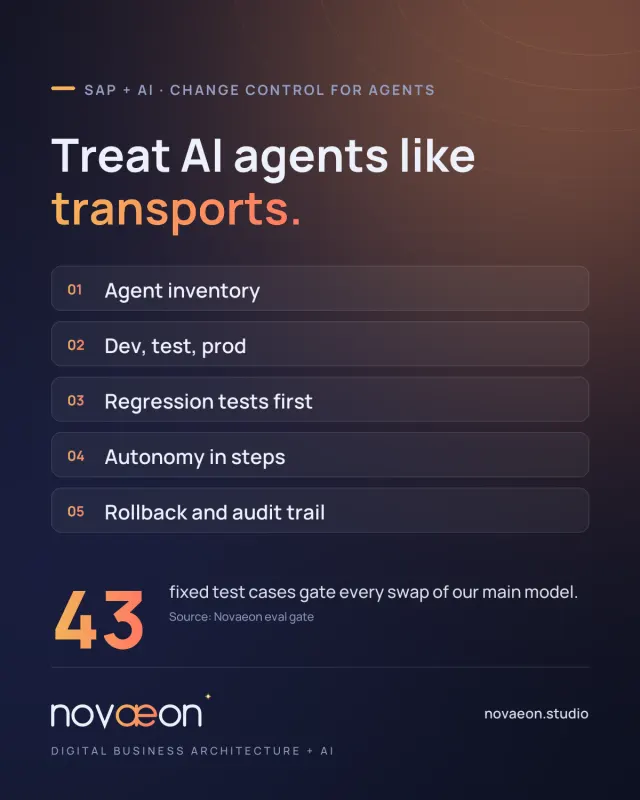
Offered as a service: domain and synthetic training data, curation and quality filtering, evaluation sets and regression gates, LoRA fine-tuning of open models. Today we build and use our own evaluation sets — a 43-case regression gate and a 60-task routing benchmark.

Learning at the source.

We keep learning at the source. Right now we’re working through Stanford’s CME295 “Transformers & Large Language Models” (autumn 2026) and the Hugging Face courses — and every new model is tested on our own benchmarks before it reaches a client.
Case study

The Novaeon Agent Factory

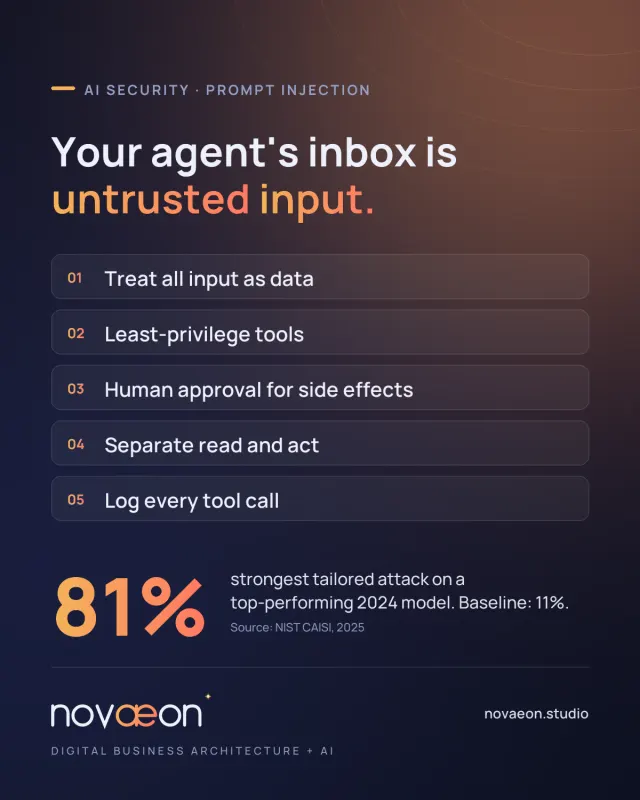
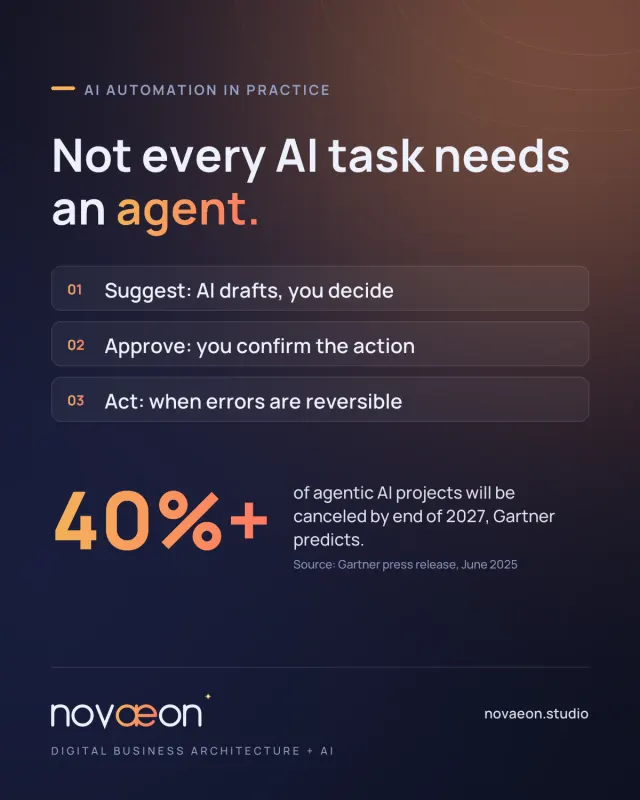
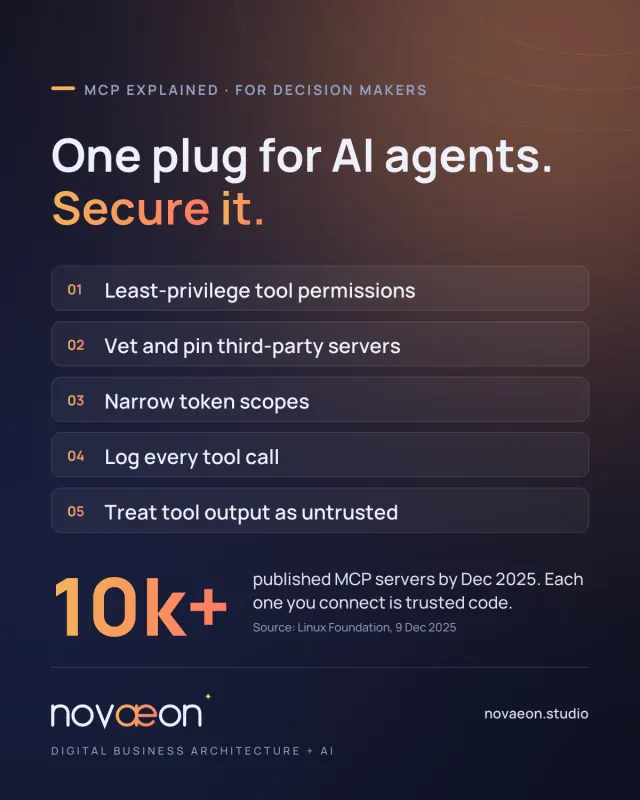
Our own company runs on the factory. Before we build agents for clients, we run them ourselves — with the same quality and release controls we implement for clients.

  • 43deterministic gate cases per model swap
  • 2 / 8candidate models passed the gate
  • 95%correct handler, 60-task routing benchmark
  • 90%correct model tier, same benchmark

Problem

A team of agents that writes, researches, publishes and runs operations every day, on a mix of local and cloud models. The main model changed about ten times in three weeks — with no fixed test before a new model went live.

Approach

  • A coordinator agent delegates to specialist agents (studio, operations); five or more independent pieces of work fan out to parallel worker lanes that return structured results with quoted evidence.
  • A router makes three decisions per task — who handles it, which model tier, reasoning on or off — with two independent judges; any doubt escalates to the stronger model.
  • A regression gate for every model swap: 43 deterministic test cases, no LLM as judge. Pass = score at least baseline minus 2, zero tool-calling regressions, zero request errors. Each swap now also produces a release record, entered in a hash-chained audit log.
  • Everything public is fact-checked against sources and checked by a second, different model before it goes live.

Result

  • Model swaps became releases: of 8 candidate builds, 2 passed the gate and 6 were stopped before production.
  • One model under test tried to announce a server reboot it had no tool for — it surfaced in the gate, not in production.
  • Routing on our 60-task benchmark: 95% correct handler, 90% correct model tier; a routing decision takes about 1.5 s on local hardware.

Our own benchmarks, October 2026. The routing benchmark uses 60 realistic requests with fixed reference labels (measured before operations cases were added).

Put your first agent into production. Properly.

Tell us about the process, the stack and the constraints. We come to the first call prepared.